
Sources for Jenkins County Former Owners
Former owners of a Jenkins County property surface one deed at a time. There is no single roster. Start with the newest deed tied to the exact tract. Note the grantor, then trace how that person acquired the same land. Addresses get you going. Older digging leans on legal descriptions, plat references, recording books, and estate files. When the online property records run out, clerk-held books, archives, newspapers, and the parent counties can stretch the property search further back. Anyone can search Jenkins County property records by address and work outward from there.
| Source | Years It Covers | Where Held | What It Shows |
|---|---|---|---|
| GSCCCA real-estate index | 1974 forward | Online; Jenkins clerk is custodian | Party roles, instrument, dates, book/page, and image access |
| Older deed books or microfilm | Before the online start | Ask the Jenkins clerk and Georgia Archives | Earlier conveyances and cited prior instruments |
| Recorded plats | Online Jenkins index from 2004 | GSCCCA and clerk | Caption, lot/block, district, land lot, roads, and easements |
| Probate, tax, map, and newspaper leads | Varies by collection | Custodian, archives, and library | Estate links, older names, legal notices, roads, and place clues |
Post-1974 transfers can begin online. For older material, go straight to the clerk or archives with a known book and page, and use the prior-deed reference language in the current deed whenever it survived.
The 1974 Line in Jenkins County Ownership History
The Jenkins County GSCCCA status shows the county's real-estate deed index starting January 1, 1974. That is a clean, fixed beginning for online deed records. It is not, of course, when Jenkins County land first changed hands.
If your chain of former owners stops at 1974, note the oldest deed's legal description, land district or lot, the prior deed it cites, any road or creek, and acreage. Also note the neighboring-owner calls. Then ask Clerk Tracey Herrington about original books, local indexes, microfilm, or certified copies. The county publishes no first-deed year. There is no full inventory of pre-1974 access either. So treat 1974 as the online floor rather than the start of Jenkins ownership history.
Online cutoff, not history cutoff. The lack of a pre-1974 web result means the search has reached the documented index boundary, not that earlier owners never existed.
Anchor Previous Jenkins County Owners to the Latest Deed
A backward chain stands on its first link. Pull the current parcel card only to pin down the tract, then locate the latest matching deed through the GSCCCA name index. Assessment data on qPublic reflects the last certified tax roll, so the assessor's owner of record can lag a fresh filing. Read the deed image itself. Skip trusting the index row. Copy the grantor and grantee, capacity, execution and recording dates, deed type, book and page, legal description, parcel clues, prior-deed reference, easements, reservations, and the clerk stamp. A return address never proves anyone lived on the land. The GSCCCA name-search source lays out the party-direction, instrument, county, date, and display controls for starting that reverse search.
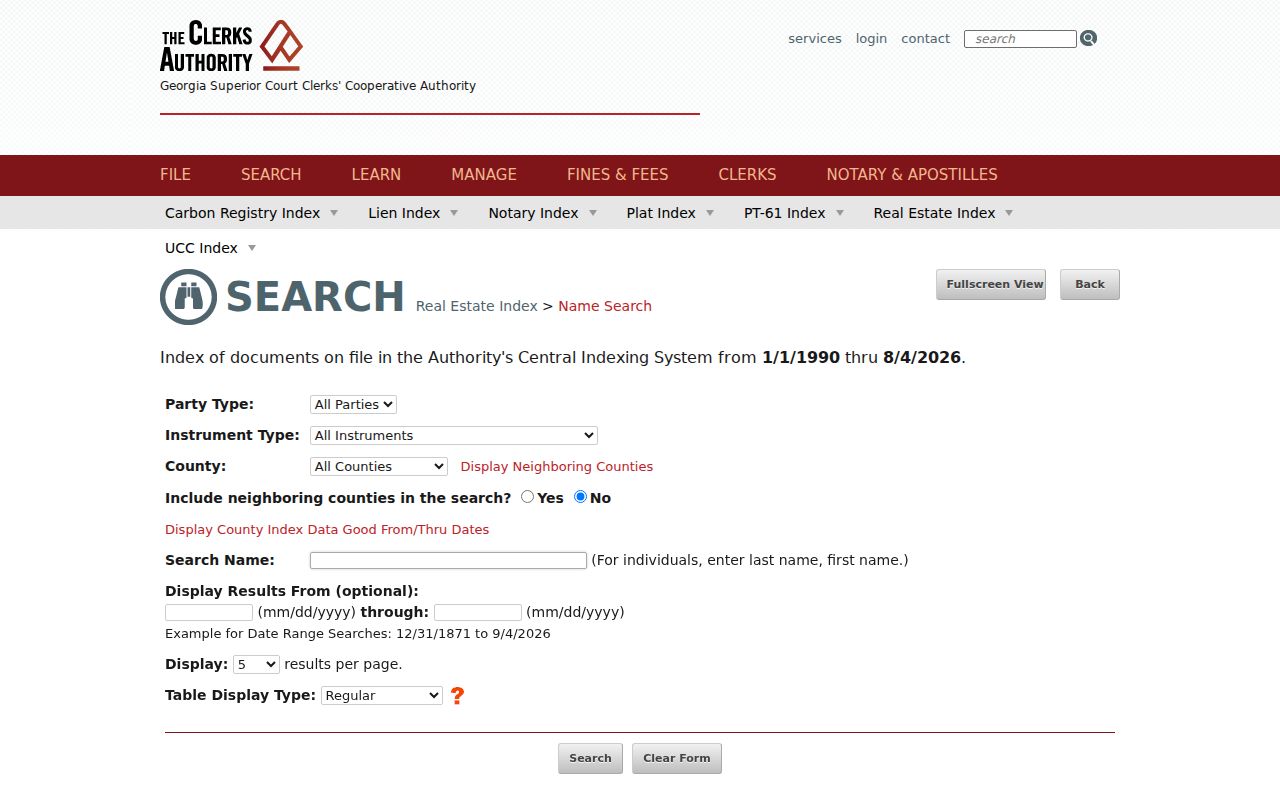
The form only locates an index entry. The deed image and a matching legal description decide whether a result truly belongs in the property's history.
Note: Describe a result as the assessor record or recorded deed shows it; do not turn either source into an unqualified title opinion.
Walk a Jenkins County Deed Chain in Reverse
Each transfer is the key to the one before it. Search both directions of a name. Every prior owner appears as both grantee and grantor. Keep the land description in front of you the whole way. Hold onto that habit. It keeps a second tract owned by the same person from sneaking into the timeline.
- Open the newest matching deed and write one timeline row with its recording date, grantor to grantee, deed type, and book/page.
- Take the grantor's recorded name and search that party as grantee. Use a date window before the newest transfer.
- Open the earlier instrument and compare legal descriptions, acreage, plat references, reservations, and prior-deed citations.
- Repeat until the descriptions diverge, an estate or court event creates a gap, or the 1974 online boundary is reached.
- Carry the last sound reference into clerk books, probate files, archives, or the correct predecessor county.
- Grantor
- The party conveying the stated interest; often, but not always, the seller.
- Grantee
- The party receiving the stated interest; often, but not always, the buyer.
- Chain of title
- The linked sequence of instruments affecting ownership of the same tract.
- Reverse index
- An index arranged by grantee, useful for locating how a prior owner acquired land.
- Warranty and quit claim
- Different forms of conveyance with different promises; the instrument text controls.
Estate Records Can Repair a Jenkins County Chain Break
Not every former owner sold the land. GSCCCA's instrument list includes Deed from Estate, Estate Documentation, Deed of Gift, Power of Attorney, Court Order, and Trustee's Deed. Foreclosure or tax-sale deeds also appear there. When a name vanishes from the normal sequence, search those document types. Then check Jenkins Probate Court records. Look for wills, administration, year's support, or other orders tied to the parcel. Probate names, obituaries, cemetery records, and newspaper notices suggest people to search. They do not settle who inherited title. Match each heir or representative to a recorded deed or probate order. An explicit legal description works too. One estate can hold multiple tracts. That can make acreage or address matching unreliable. Lean on the deed record rather than the address.
Four Predecessor Counties May Hold Earlier Owners
Jenkins County was created in 1905. Its land was taken from Burke, Screven, Bulloch, and Emanuel counties. A deed older than that split may sit in the recording office that governed the land at the time. The 1906 Jenkins County map was surveyed from November 27, 1905 through June 1, 1906. It helps align old roads, streams, settlements, and county edges with a legal description. Turn on GSCCAA's neighboring-county option only when geography or an instrument supports it. Broad name searches across four counties produce false matches fast. A historical map frames the question well. But it fixes neither a modern boundary nor a former owner of record.
Use Jenkins Plats When Names and Roads Change
The GSCCCA plat name search covers Jenkins plats online from February 28, 2004 onward. Its fields include instrument type, county, neighboring counties, name, Sec/GMD, district, land lot, dates, result count, and display options. Jenkins does not appear in the separate optional property-search list, so caption, district, and land-lot searching or a request to the clerk beats promising a subdivision-address lookup. A recorded plat can tie a later street address to the lot, block, land lot, road, right of way, easement, or common area named in older deeds. Compare the plat image against each deed's legal description. Tax maps and GIS lines stay reference tools. A licensed surveyor is the only source for a legal boundary opinion.
Note: Jenkins plat coverage begins online in 2004; older recorded plans may require a book/page request to the clerk.
Georgia Archives Adds Context to Jenkins County Past Owners
The Georgia Archives research route opens several doors at once. Virtual Vault, the Digital Library of Georgia, Georgia Historic Newspapers, FamilySearch, GIL, finding aids, and the General Name File all sit behind it. Try searching Jenkins, Millen, a surname, a land district, a road, a stream, a railroad, a tax sale, an estate, or a legal notice. Write down the collection, date, page, creator, and image provenance for every lead you pull. That habit pays off later.
Local shelves can help too. The Screven-Jenkins Regional Library and the Jenkins County Memorial Library may hold newspapers, obituaries, yearbooks, cemetery material, or history files. Call ahead to confirm what is actually available. These sources often point toward a book and page or a probate case. The clerk or court record still controls.
How Far Jenkins County Ownership Records Reach
No single end date fits every property. The clearest public milestone is the 1974 start of the Jenkins GSCCCC deed index. Reach earlier than that and the work moves into clerk books or microfilm. The trail may then cross into the predecessor county. That county held the land before 1905. Georgia Archives maps, land and court collections, historic newspapers, and probate sources can supply the next identifier when a chain goes cold. A copied index deserves a check against the custodian whenever legal rights are at stake.
Some chains simply break. A missing image, a changed legal description, an estate gap, or a shift in jurisdiction can stop the run of names. Mark that point honestly instead of joining two owners by guesswork. A title professional can examine unresolved interests before a purchase, an estate, or a dispute. For the mechanics of pulling one instrument, the Jenkins County deed records resource covers index and copy routes.
Lawful use. Research previous Jenkins County owners for property history, estate work, title diligence, and recorded rights. Never use names or addresses to stalk, harass, or harm a living person.
A defensible timeline labels every source by type. Call each one an index, image, certified copy, map, or secondary historical lead. Record the access date as well, since portal coverage and availability shift over time.